Stanford
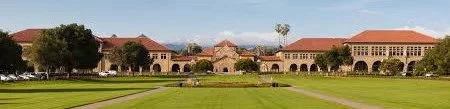
To make real impact in the world, I believe you need the support of a terrific organization. I feel fortunate to have been affiliated with Stanford for over 30 years -- since 1995. Along the way I've been inspired by peers, challenged by students, and guided by Stanford's ethos of making the world a better place.
Today my Stanford home is Stanford Lifestyle Medicine, part of the Stanford School of Medicine. I serve as the Behavior Design Specialist, helping translate scientific insight into behaviors that make people healthier and happier. My projects range from innovation to pilot testing, teaching to mentoring.
My Stanford Beginnings
Thirty-five years ago, I was living in the south of France, reading Aristotle's Rhetoric in French. That's when I had an epiphany that would change my life: Everything Aristotle described would someday be done by computers. I realized it was inevitable: computers would soon be designed to influence human attitudes and behaviors. This insight blew my mind. In that moment, I decided to investigate this new area as I pursued my doctoral work.
As a doctoral student at Stanford in the 1990s, I ran the first-ever series of experiments to discover how computers could change people's attitudes and behaviors. I named this new area "persuasive technology." My advisers were Clifford Nass, Byron Reeves, Terry Winograd, and Philip Zimbardo. Stanford recognized my research with the Maccoby Prize in 1997, and the work spawned an international academic conference that continues today.
In 2006 I testified before the U.S. Federal Trade Commission, warning policymakers about dangers that future technologies would create. You can hear that testimony on my home page.
The Stanford Behavior Design Lab
In 1998 I founded a research lab at Stanford, first known as the Persuasive Technology Lab. In 2011 I renamed it the Behavior Design Lab to match my research focus.
Our lab's mission: Teach good people how human behavior works so they can create solutions that effectively increase health, boost happiness, and promote human flourishing.
The lab was never about publishing papers for the sake of publishing. We focused on breaking new ground: research, conferences, prototypes, and innovations. The lab brought together an interdisciplinary mix of Stanford students, recent graduates, and quantitative researchers.
My Teaching
In 1998, I began teaching at Stanford. For about 10 years I taught in the Computer Science Department. As my interests evolved beyond technology, I changed departments, teaching through the Graduate School of Education and later the School of Medicine, and contributing at the d.School and the Symbolic Systems Program. No matter the department, I welcomed students from across campus into my courses and my lab.
Each year I created a new course, something that had never been done before. My classes always related to human behavior, but I explored from different angles. On the first day of class I would tell students that my courses are like a start-up: We have a plan for now, but I'm quite sure the plan will change. And I don't know if we will succeed. Why? Because no one has ever explored this topic before, and no one has ever taught a class like this before. Then I'd invite them to drop the class: "If this kind of class scares you, then you need to find a class that is more traditional."
So what happened? Almost no one dropped. Most students loved the idea of a groundbreaking class. And I did too.
A Few Former Students
Below I highlight some of my former students and lab members. There are many more doing remarkable work. As a teacher for all, and a mentor for some, I am grateful for the opportunity. I always challenge my students to use what they've learned from me to make the world a better place.
-

Tristan Harris
-

Ramit Sethi
-

Cristina Cordova
-

Mike Krieger
-

Yin Yin Wu
-

Akshay Kothari
-

Dana Sittler
-

Dean Eckles
-

Nina Kim Schultz
-

Othman Laraki